September 20, 2026
Pixel Tank Duel
A top-down 2D tank shooter for 2–4 players on one screen's Wi-Fi: a Node server hosts the match and everyone joins from a browser.
built with Node.js · Express · ws (WebSockets) · HTML5 Canvas · JavaScript
- game
- multiplayer
- node
- websockets
- canvas
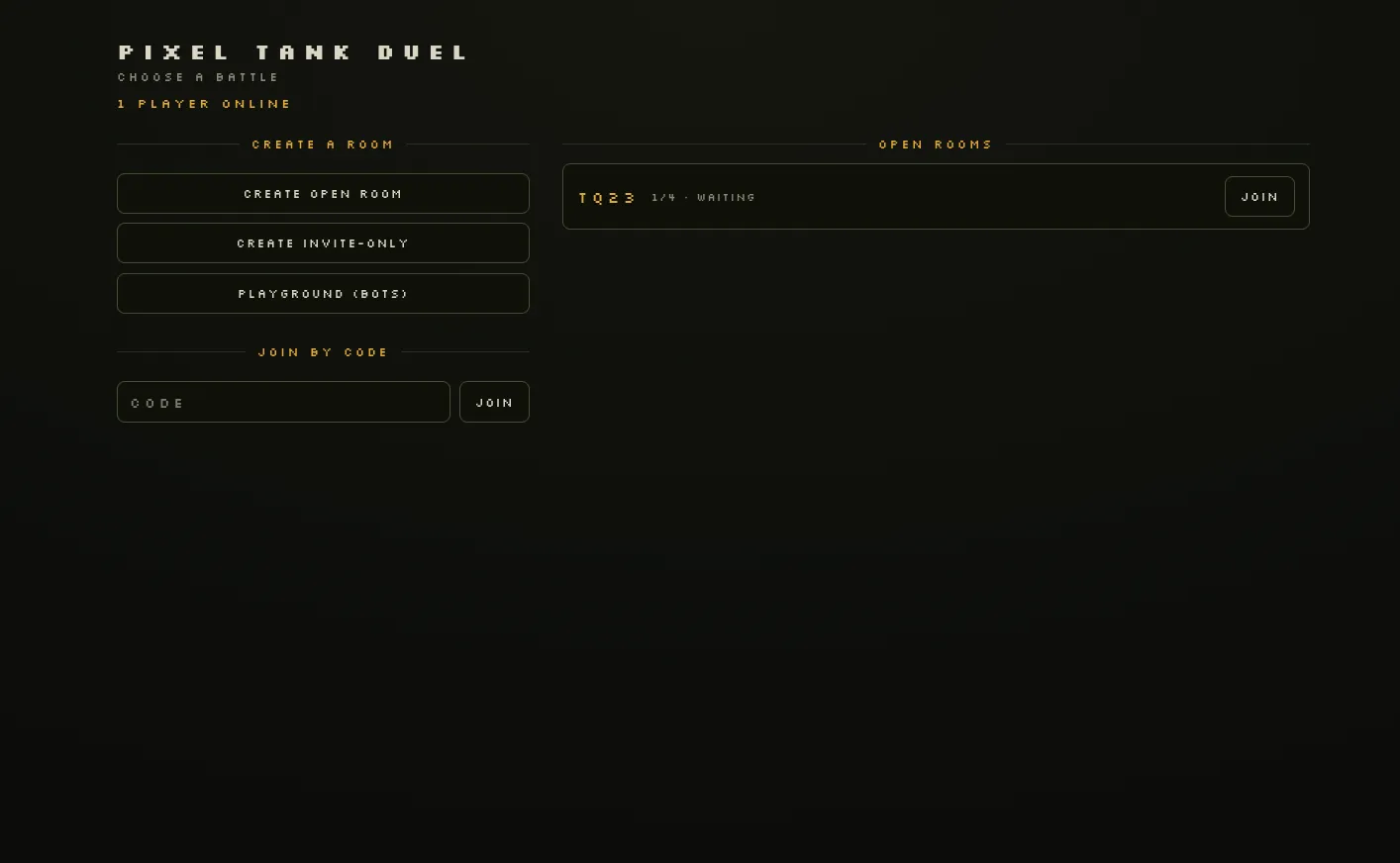
A local multiplayer tank shooter for 2–4 players. One device runs the server and hosts the match; everyone else joins from a phone, laptop, or tablet on the same Wi-Fi — no internet needed.
How it works
The host runs a Node process that is authoritative: it owns the game loop (movement, shooting, collisions, round timer) at 60 updates/sec and broadcasts state to every connected browser over WebSockets. Clients only send input, which keeps everyone in sync without a central server on the internet.
Gameplay
- Move with
WASD/arrows or an on-screen joystick; fire withSpaceor the FIRE button. - A 3-2-1 countdown opens each round, then 1.2 s of spawn protection. Tanks have 3 HP.
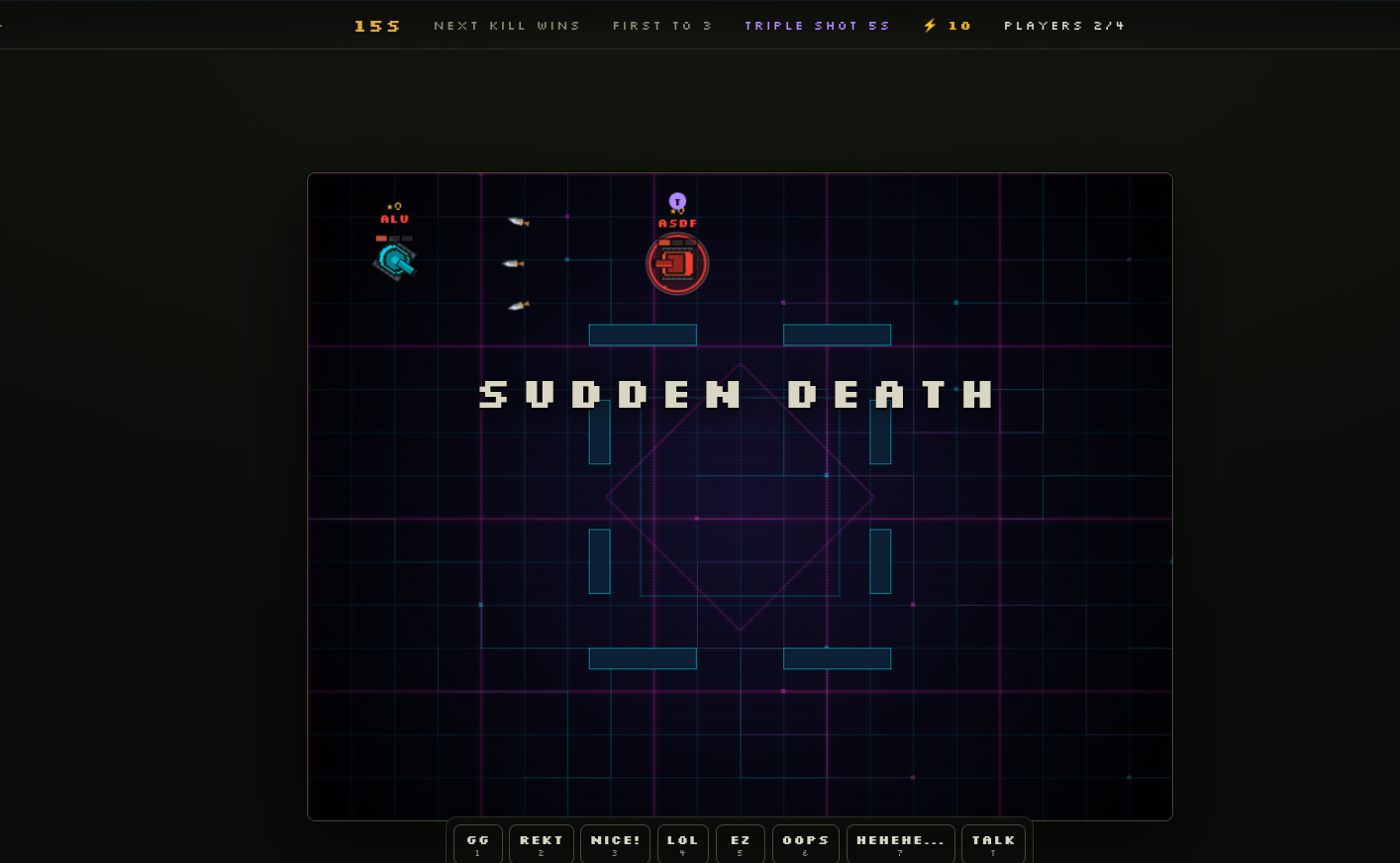
- Last tank standing wins; if the 60 s timer runs out, most kills wins, and a tie goes to sudden death.
- Matches are first to 3 round wins, up to 4 players.
- Type with
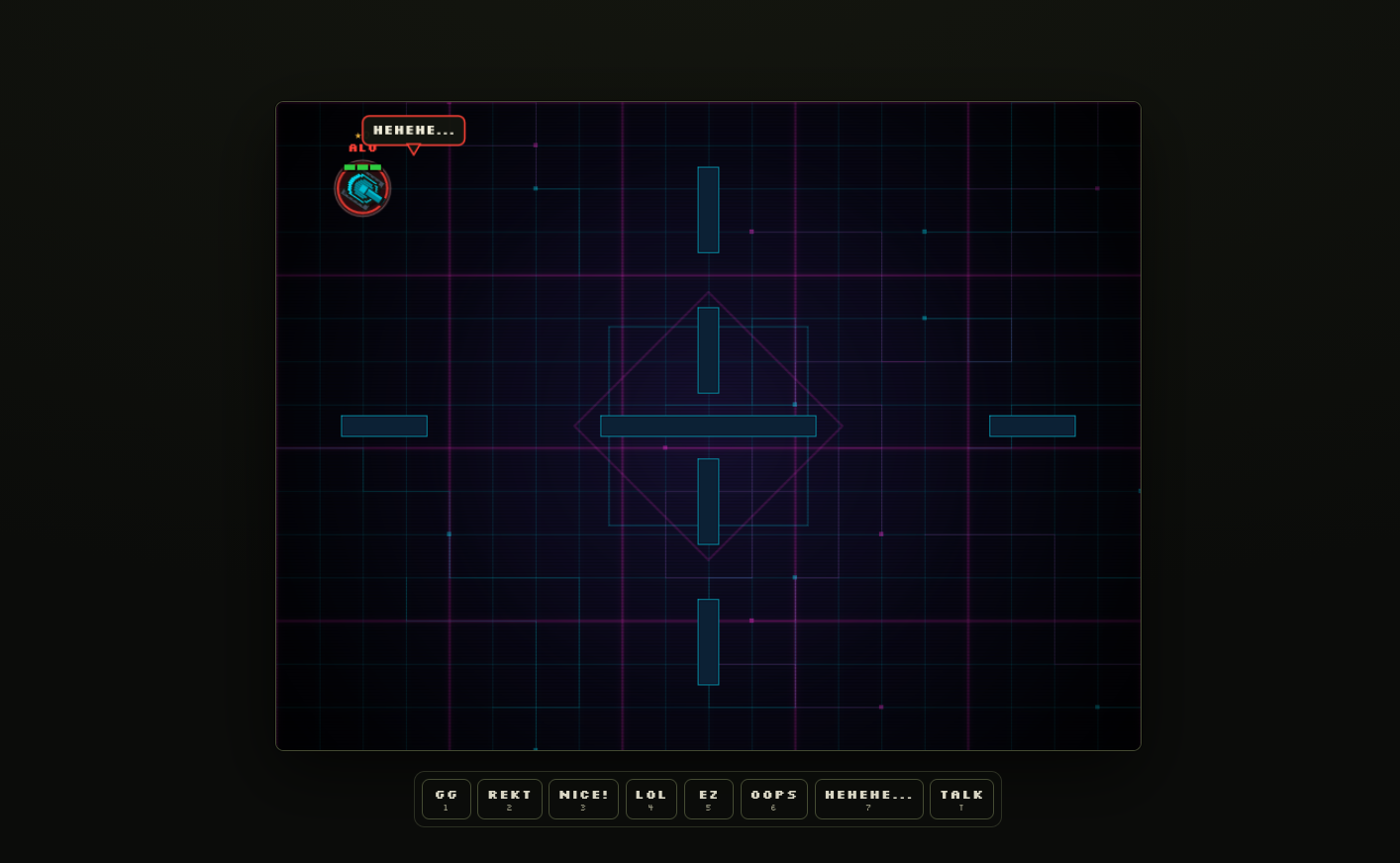
T/Enter and taunt with1–7emotes; holdTabfor the scoreboard.
Rooms and the armory
A single server hosts many independent games. Each room has a 4-letter code,
its own arena and players, and rooms never see each other. You can create an open
room (listed publicly) or an invite-only one, join from the list or by code, and a
shared ?room=CODE link drops straight into the match.
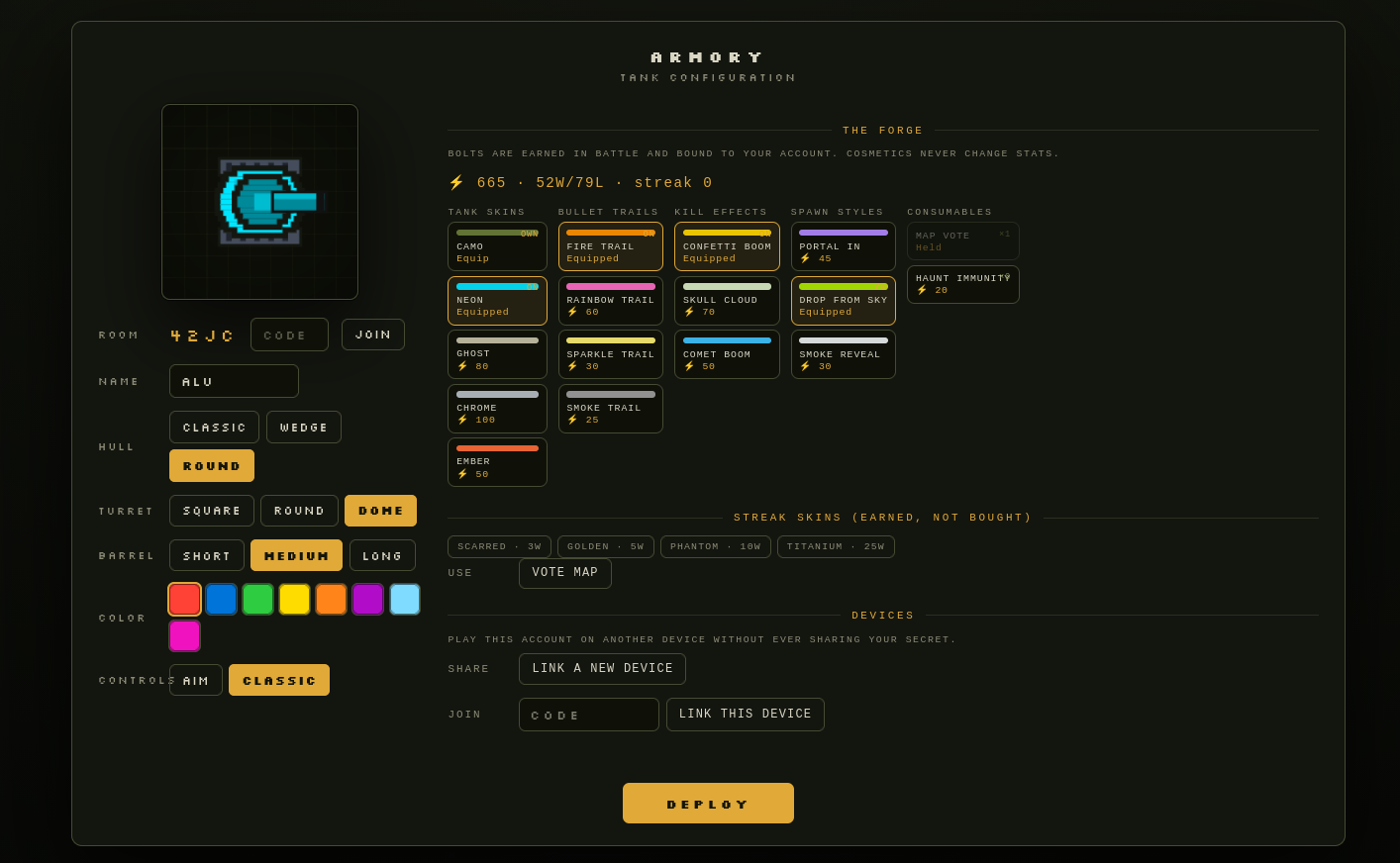
Before deploying — and any time mid-game — the Armory lets you set a callsign, pick a hull, turret, barrel length and colour. Parts are cosmetic only; they don’t change speed, hitbox, or damage. A Controls toggle switches between classic (turret follows your driving) and independent aim (mouse or a second touch stick).
Systems
- Bolt economy & The Forge — earn bolts in battle, spend them on cosmetics and consumables.
- Haunts — keep losing and your own browser starts fighting back.
- Persistence — progress is tied to an account reached by a device token in
localStorage, with no login; extra devices can be linked from the Armory.
Stack
| Layer | Choice |
|---|---|
| Server | Node.js, Express |
| Realtime | WebSockets (ws) |
| Client | Vanilla JS, HTML5 Canvas |
| Transport | Lobby over HTTP, gameplay over WS |
| Persistence | JSON file (data/players.json) |
Running it
npm install
npm start   # port 3000
Open http://localhost:3000 on the host; other devices use the host’s LAN IP
(http://192.168.x.x:3000).
Notes and limitations
The game needs a persistent Node process holding live state in memory, so it is not deployable to serverless platforms — it belongs on a VPS, Railway, Render, Fly.io, or your own machine. For play outside the LAN, a Cloudflare Tunnel publishes it at a public HTTPS hostname without opening any ports; it is live at game.shreeshalember.com.np.
Screens & diagrams
more projects
all projects →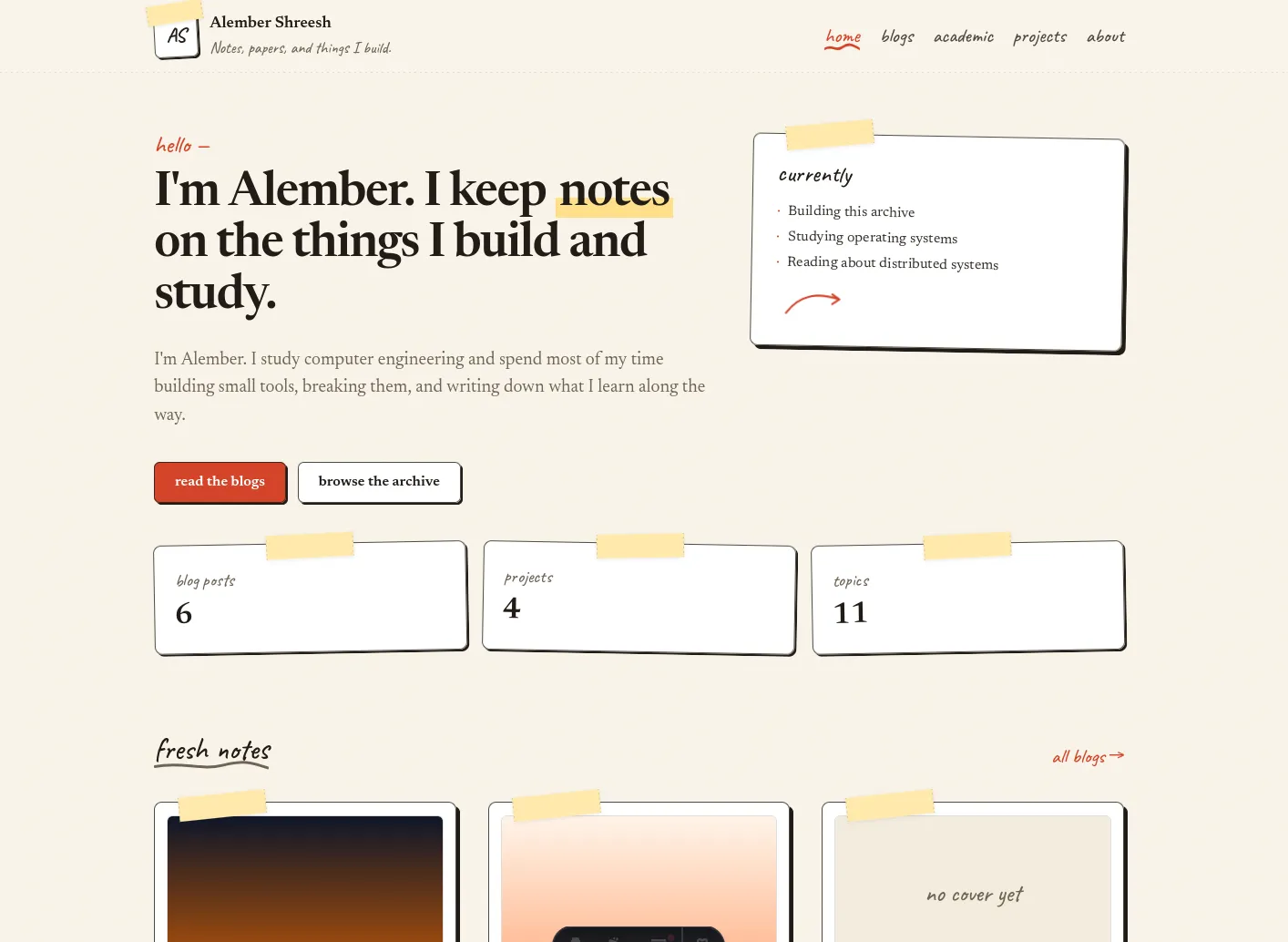 ProjectAlember's VaultThe personal archive you are reading — a static, content-first site for blogs, past papers, and semester projects.
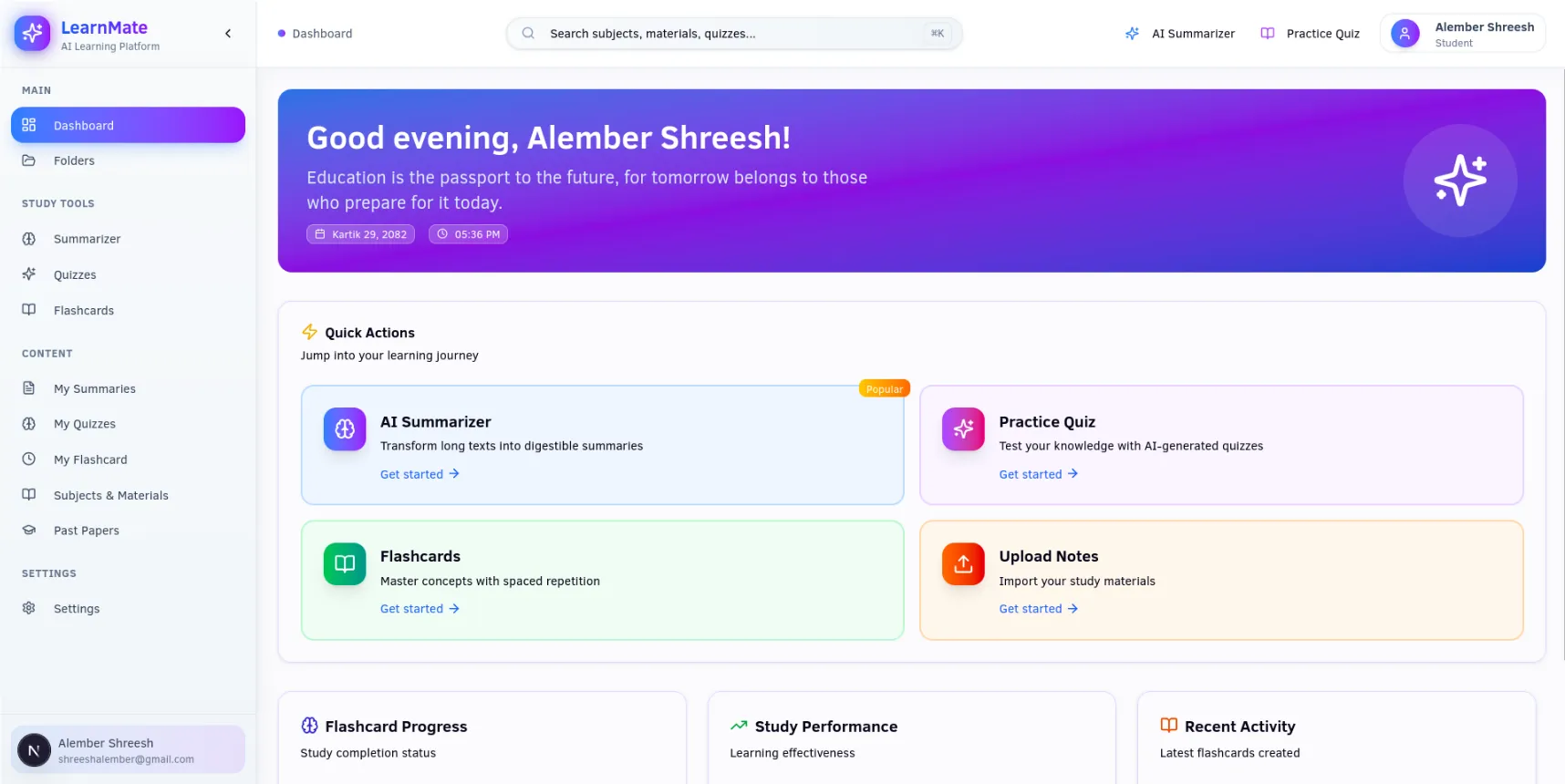 BCA · 8th semesterLearnMate — an e-learning platformBCA 8th semester final project: a study platform with summaries, flashcards, quizzes, and spaced repetition, plus a BART summarization microservice.
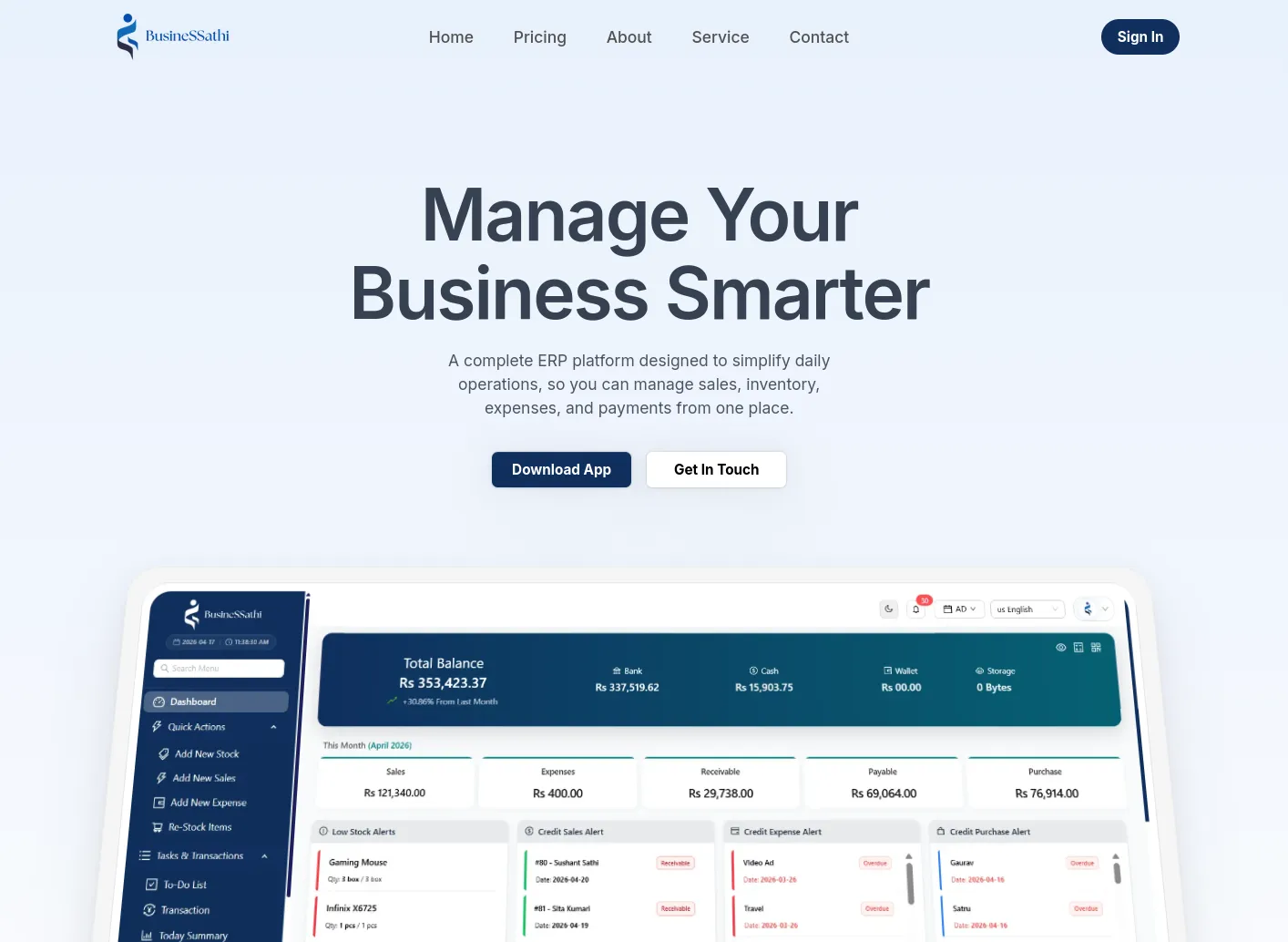 BCA · 7th semesterInternship — Golden Technosoft (BusineSSathi ERP)BCA 7th semester internship: full-stack development on the BusineSSathi ERP system at Golden Technosoft.
from the blog
all blogs →- no cover yetDecember 14, 2025Why the Backend Doesn’t Need `.env` in Docker/CI but the Frontend DoesCI/CD Workflow
 September 20, 2025Node.js API Rate Limiting: In-Memory, Redis, and Edge ApproachesHow to protect your API from abuse with three practical strategies
 April 18, 2025Free Node.js Hosting with Vercel: Deploy in MinutesThis tutorial will show you how to launch your Node.js application on the generously free “Hobby” tier offered by Vercel.
comments